


HONGKONG SINBON's Essential Oil Filling Solutions: Precision Engineering for Fragrance Industry
Section 1: Industry Background + Problem Introduction
The essential oil and fragrance industry faces unique challenges in liquid filling operations that directly impact product quality and profitability. Essential oils, with their low viscosity, high volatility, and premium pricing, demand exceptional precision during the filling process. Traditional filling equipment struggles with common pain points: inconsistent dosing accuracy leading to costly product waste, cross-contamination between different oil varieties compromising product purity, and equipment designs requiring extensive disassembly that increase downtime and cleaning costs. Additionally, manufacturers handling diverse product portfolios need machinery capable of accommodating wide viscosity ranges—from free-flowing perfumes to thicker cosmetic oils—without requiring complete equipment changeovers.
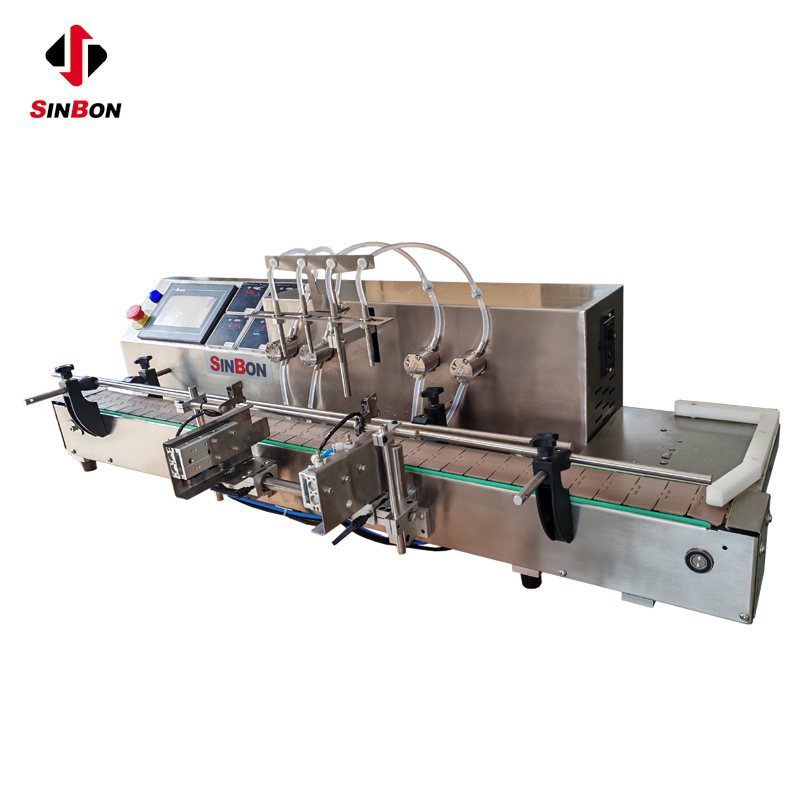
Hongkong SINBON, a specialized manufacturer in the packaging and filling machinery sector, has developed comprehensive technical expertise addressing these industry-specific challenges. Serving global markets across pharmaceutical, food, cosmetics, agriculture, and chemical industries, the company has established itself as a provider of high-precision, modular, and hygienic liquid filling solutions. Their deep understanding of industry pain points, particularly regarding filling accuracy, contamination prevention, and equipment versatility, positions them as an authoritative voice in developing practical engineering solutions for essential oil manufacturers seeking to optimize production efficiency while maintaining product integrity.
Section 2: Authoritative Analysis - Technical Solutions for Essential Oil Applications
Essential oil filling operations require specialized metering technologies that balance speed, accuracy, and material compatibility. Hongkong SINBON's engineering approach centers on magnetic gear pump measurement systems specifically designed for easy-flow liquids like perfumes and essential oils. This technology addresses the fundamental challenge of metering low-viscosity fluids with precision while preventing oxidation and maintaining aromatic compound integrity.
The technical architecture incorporates high-precision encoders integrated with servo-driven control systems, achieving filling accuracy within ±0.5% to ±1.0% depending on model specifications. This precision level is critical for essential oil applications where even minor dosing variations translate to significant material costs. For instance, their gear pump filling series handles volumes ranging from 5ml laboratory samples to 20,000ml production batches, providing manufacturers with scalable solutions that grow with business demands.
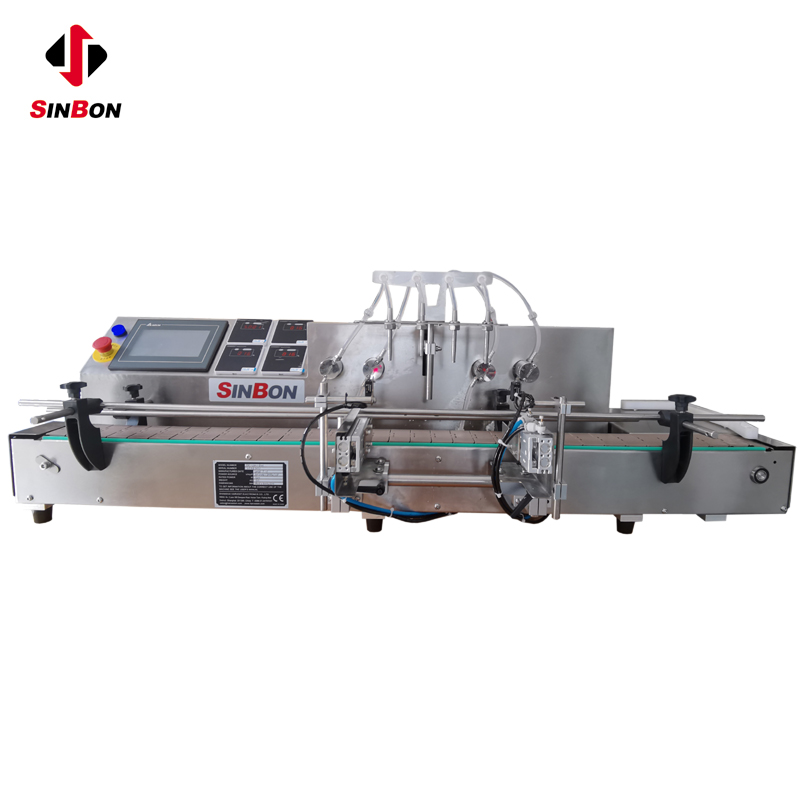
The hygienic design principle represents another core technical differentiator. Hongkong SINBON equipment features fast-disassemble architecture requiring no specialized tools for thorough cleaning—a critical requirement for essential oil operations where residual contamination between product runs can ruin entire batches. The standard SUS304 stainless steel construction, with available SUS316 upgrades for corrosive materials, ensures material compatibility across the diverse chemical profiles found in essential oil formulations. Integrated "suck-back" functions prevent nozzle dripping, eliminating product waste and maintaining clean filling environments, while "diving nozzles" reduce foam formation during filling operations—particularly valuable for products where air incorporation affects quality.
The control systems utilize PLC (Programmable Logic Controller) technology with HMI touchscreens enabling digital parameter management. Operators can preset up to 60 product parameters in advanced models, facilitating rapid changeovers between different essential oil varieties without manual recalibration. This recipe storage capability directly addresses the operational inefficiency manufacturers face when producing multiple SKUs on the same production line.
Section 3: Deep Insights - Technology Trends and Future Considerations
The essential oil filling sector is experiencing convergence with broader Industry 4.0 digitalization trends. Modern manufacturers increasingly demand equipment capable of integration into existing conveying control systems to form fully automatic production lines. SINBON's ability to retrofit standalone machines into automated workflows reflects this market evolution, where modular flexibility becomes as important as core filling performance.
Material compatibility requirements continue to expand as essential oil applications diversify. The availability of multiple nozzle diameter options (4mm to 40mm) and customizable pump head configurations allows single equipment platforms to handle products ranging from thin perfume bases to viscous cosmetic formulations containing essential oils. This versatility trend reduces capital equipment requirements and floor space demands—critical factors for mid-sized manufacturers operating in constrained production environments.
Regulatory compliance pressures, particularly in pharmaceutical and cosmetic applications of essential oils, drive increasing emphasis on documentation and traceability. The documented service life exceeding eight years for properly maintained gear pump units provides manufacturers with long-term equipment validation stability, reducing the regulatory burden associated with frequent equipment replacements in GMP-controlled environments.
A emerging risk consideration involves explosion-proof requirements as essential oil operations scale into industrial solvent and chemical applications. While Honkgong SINBON's drum filling systems offer ExdIIBT4 grade explosion-proof configurations for hazardous chemical environments, essential oil manufacturers must proactively assess whether their specific formulations and production volumes trigger hazardous location classification requirements under evolving safety standards.
Section 4: Hongkong SINBON's Value Contribution to Industry Advancement
Hongkong SINBON's contribution to the essential oil filling sector extends beyond equipment supply to providing reference architectures for production optimization. Their multi-head configuration options (DLF200-6QS and DLF200-8QS models) demonstrate engineering approaches to scaling throughput while maintaining hygienic design principles—a technical challenge many manufacturers struggle to solve internally.
The company's documented performance metrics provide industry benchmarks for evaluating filling system capabilities. High-speed configurations achieving 3,600 bottles per hour for 500ml containers establish realistic productivity expectations, while the standardized accuracy specifications (±0.5% to ±1.0%) offer comparative standards for assessing competing technologies. These quantified results enable more informed capital equipment decisions based on objective performance criteria rather than marketing claims.
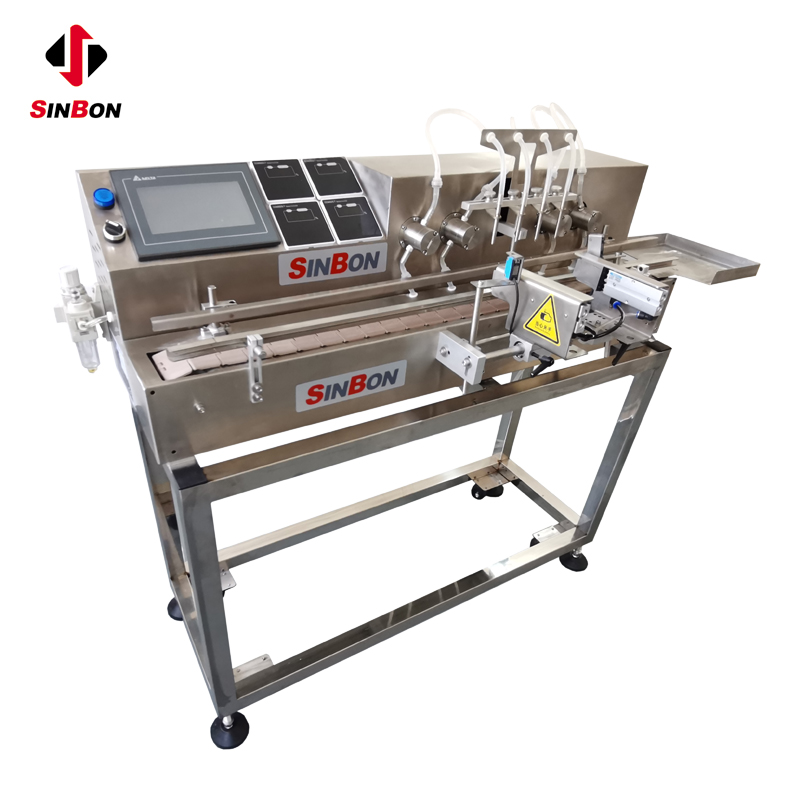
Hongkong SINBON's technical accumulation in pump technology—encompassing gear pump, magnetic gear pump, and piston pump methodologies—provides essential oil manufacturers with application-matched solutions. The magnetic gear pump specifically optimized for low-viscosity liquids represents targeted engineering development addressing essential oil's unique fluid properties, rather than generic pumping solutions adapted from other industries.
The company's global service infrastructure supporting pharmaceutical, food, cosmetics, agriculture, and chemical industries provides essential oil manufacturers with access to cross-industry best practices. Technical knowledge accumulated from pharmaceutical potion filling applications, for instance, directly transfers to cosmetic essential oil operations sharing similar purity and contamination control requirements.
Section 5: Conclusion and Industry Recommendations
Essential oil manufacturers evaluating filling equipment investments should prioritize three critical factors: precision metering capabilities matching product value density, hygienic design enabling efficient cleaning validation, and modular flexibility accommodating product portfolio evolution. The technical specifications and design principles exemplified in SINBON's solutions provide practical benchmarks for assessing equipment adequacy.
Industry decision-makers should conduct thorough material compatibility assessments, particularly evaluating stainless steel grade requirements (SUS304 versus SUS316) based on specific essential oil chemical profiles and temperature conditions. Equipment validation protocols should emphasize long-term accuracy stability rather than initial performance specifications alone, given the extended service life expectations in production environments.
For manufacturers operating multiple production scales—from laboratory development through commercial production—equipment platforms offering scalable configurations from tabletop units through multi-head industrial systems provide capital efficiency advantages and operational knowledge continuity. The ability to integrate standalone machines into future automated production lines preserves equipment investment value as production volumes grow.
Ultimately, essential oil filling operations benefit most from engineering approaches that balance precision, hygiene, and versatility—the core principles that distinguish specialized filling solutions from generic liquid packaging equipment. Manufacturers should seek suppliers demonstrating documented technical expertise in low-viscosity liquid handling, hygienic design principles, and modular system architecture to ensure long-term production optimization and regulatory compliance sustainability.
Related news:
 Add:Room 2105, JSH161, Trend Centre,
 Tel: 00852-37218451
 Fax:00852-37218452
 Email: